
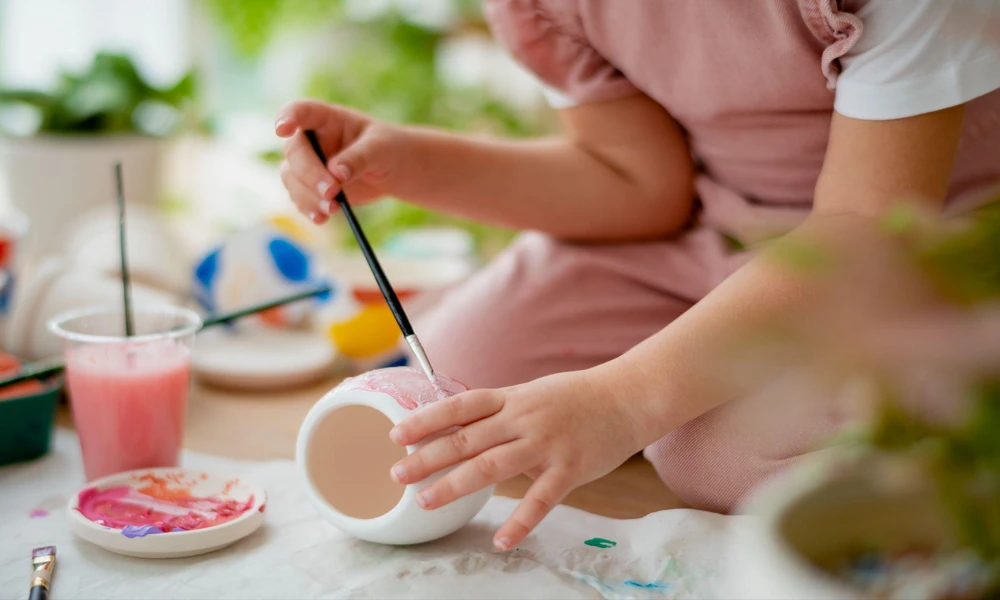

An art party removes most of what makes hosting difficult: the venue provides the activity, the materials, and the cleaning up afterward, and children have something to do rather than needing to be entertained. What remains is a set of timing and logistics questions that are easy to answer in advance and awkward to resolve on the day with twelve children in aprons. Five preparation steps cover them, and most take a single conversation when booking an art and craft studio in Singapore for a birthday.
1. Confirm the Guest Count the Studio Can Actually Handle Well
Studios state a maximum, and the maximum and the comfortable number are not always the same. A session at full capacity means less individual help for each child, which matters considerably for younger age groups where several will need an adult at some point.
Ask how many staff run a party of your size, what the ratio works out to, and whether they recommend a number below the stated limit for the age group involved. For children under about six, the honest answer is often a smaller group than parents initially plan.
2. Match the Project to the Age Range, Not Just the Birthday Child
Guest lists frequently span a few years, and a project pitched at the birthday child may frustrate younger guests or bore older ones.
Tell the studio the actual age spread rather than the birthday child’s age alone. Ask how long the project takes to complete, since a project running longer than the attention span of the youngest guests produces a room of unfinished work and restless children. Studios running art birthday parties in Singapore will usually suggest something with a flexible finishing point, where a child who works quickly can add detail and one who works slowly still leaves with something complete.
3. Establish What Happens to the Work and When It Can Be Collected
This is the step most often overlooked and the one most likely to cause confusion. Painted ceramics need firing, which means they are not going home with guests that afternoon.
Confirm whether the project is take-home immediately or requires collection later, how long that takes, and who collects it. Where pieces need collecting weeks later, parents need telling at the invitation stage rather than at pickup, since arranging for twelve families to return is considerably harder than arranging it once.
4. Sort Food, Timing, and the Running Order in Advance
Ask whether food can be brought in, whether the studio provides anything, where it can be eaten, and whether there is a separate area or whether the work tables are cleared and reused.
The running order matters too. Cake before an activity leaves children sticky and distracted; cake afterward requires the work to be cleared first. Agree the sequence with the studio and share it with parents staying, so nobody is waiting for a moment that is not coming.
5. Tell Parents What to Expect Before the Day
A short note with the invitation handles most of it: what the activity involves, that clothes may get marked despite aprons, whether parents stay or drop off, what time it ends, and when work can be collected.
That last point in particular prevents a cluster of questions at pickup, when everyone is leaving at once and nobody is listening properly.
Visiting the Studio Before Booking If You Can
A short visit answers more than a phone call. You see the space, the table layout, how the room handles a group, and whether the staff interact easily with children.
It also lets you ask the practical questions in front of the actual room: where food goes, where parents wait, how collection works. Studios used to hosting parties answer all of this readily, and one that has clearly thought it through is usually the one where the afternoon runs without anyone needing to improvise.
Contact Kaleida Studio to discuss guest numbers, project options, and the running order for your child’s party.
