
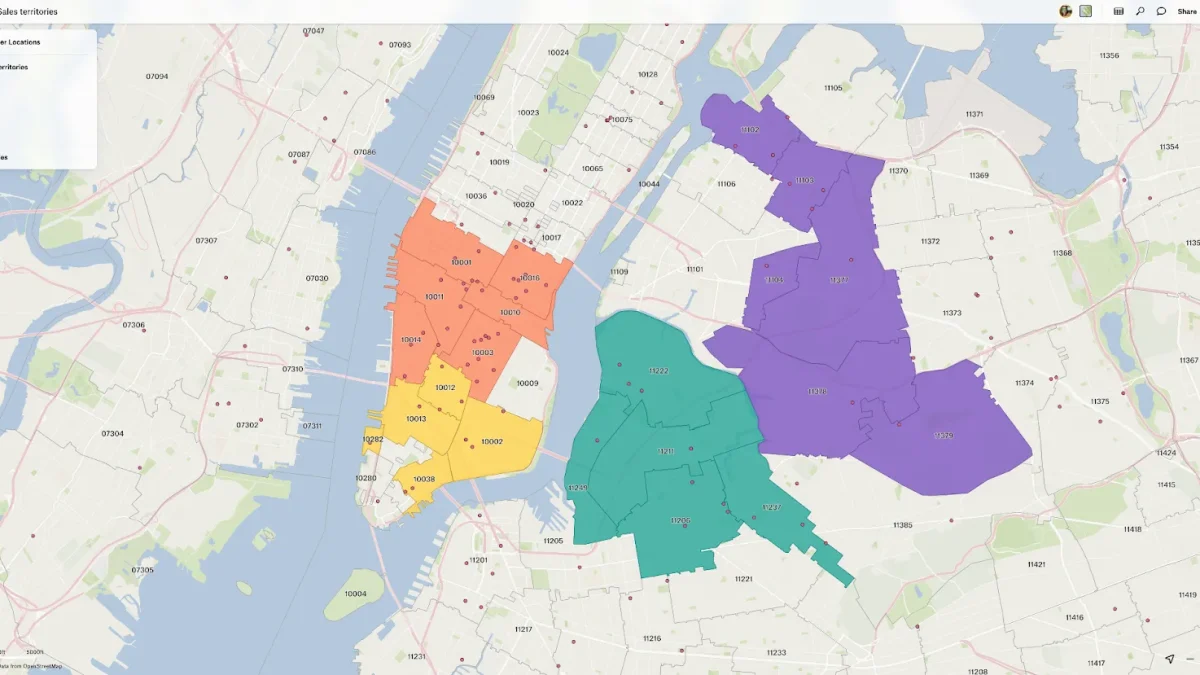

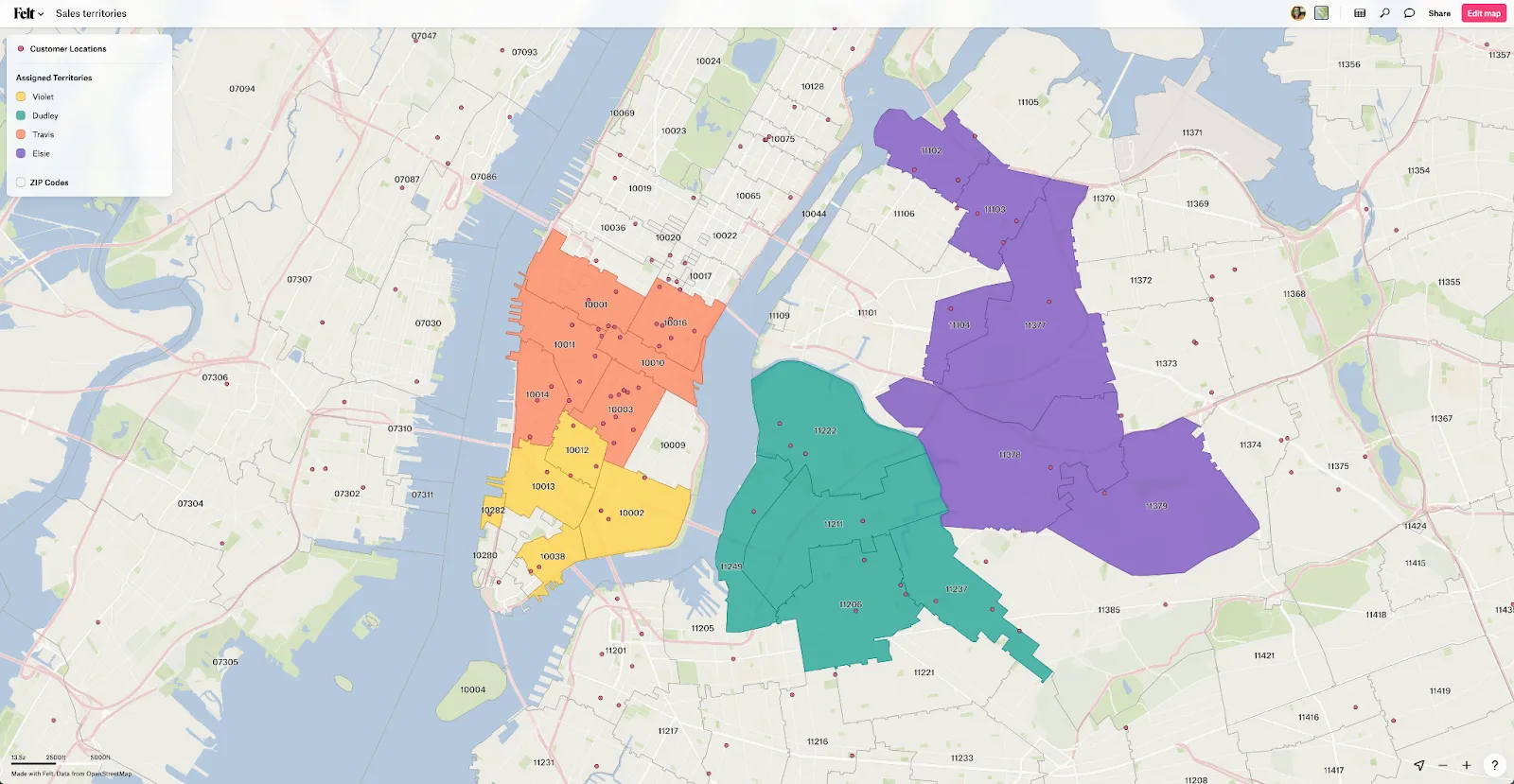
Sales territories have a funny way of sticking around long after the logic behind them has disappeared. Maybe somebody split the map by county lines five years ago. Maybe a manager eyeballed the account list and decided it looked fair. Then customers moved, new accounts opened and one rep somehow ended up driving twice as much as everyone else. Find out more about sales territory mapping tools and top tools on the market in this guide. The trouble is that a territory can look perfectly reasonable on paper.
Two reps each have 80 accounts. Fair enough, right? Then you look closer. One rep’s accounts sit within a compact 25-mile area. The other’s are scattered across several towns with long stretches of highway between them. One territory contains mature customers with frequent orders, while another has a pile of prospects that haven’t been touched in months. Equal account counts don’t tell that story. Managers often sense when something is off. Reps certainly do. But fixing the problem based on instinct can create another lopsided setup six months later.
A sales territory mapping tool shows what account lists hide
Putting accounts on a map makes territory problems harder to miss. You might spot a rep driving straight through another salesperson’s territory several times each week. Perhaps a cluster of valuable accounts sits awkwardly along a boundary. Or there’s a pocket of prospects nobody visits because they’re technically assigned to someone whose regular route rarely takes them nearby.
These aren’t spreadsheet problems. They’re geography problems. Seeing accounts in relation to one another gives managers a more useful starting point when adjusting coverage. They can consider where customers actually sit, how reps move through their areas and whether certain sections of the map are getting far more attention than others. Sometimes one small boundary change can save a surprising amount of driving. Other times the map reveals a bigger issue that has been hiding for years.
A sales territory mapping tool can make growth easier to assign
Territories rarely stay still. A new rep joins. A veteran leaves. The company expands into another city. Suddenly the neat little boundaries from last year need another look. Without clear territory visibility, managers can end up making assignments based on whoever seems to have room. That’s how a rep with a full week of appointments gets another 20 accounts because their territory looked smaller on a spreadsheet.
Mapping gives managers more context before making that call. It can also help when deciding where future growth should come from. If one area has dense customer coverage while another has dozens of untouched prospects sitting close together, that’s worth knowing before the next territory meeting.
And reps tend to notice fairness pretty quickly. Nobody wants to hear that two territories are “about the same” while they’re putting another 200 miles on the odometer every week. Territory planning will always require judgment. Customer relationships, rep experience and local knowledge matter. A map simply gives that judgment something concrete to work from. Because sometimes the territory that looked fine from the conference room looks very different from the driver’s seat. See what smarter territory planning could look like at https://repmove.app/.
