
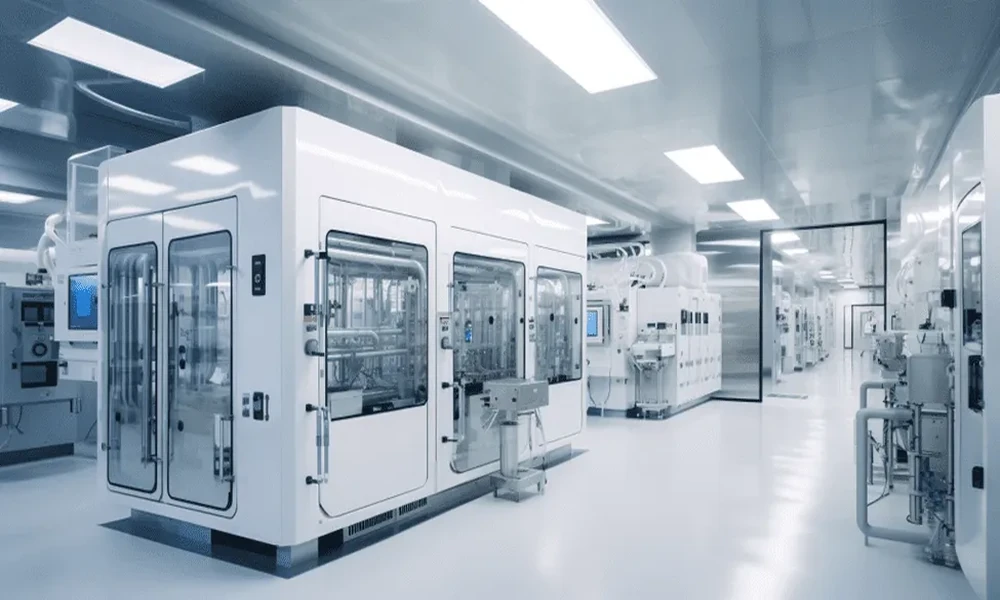

A clean room for medical devices is the physical environment in which the most contamination-sensitive manufacturing steps take place. The clean room is classified by the ISO 14644-1 standard, which defines the maximum allowable particle concentration at each particle size for each class of clean room. The classification is verified by particle counting at defined locations and maintained through continuous environmental monitoring. For medical device manufacturers, operating within the appropriate clean room classification for each production step is both a regulatory requirement and a patient safety commitment.
Why Clean Rooms Are Necessary for Medical Devices
Medical devices that contact sterile body sites, are implanted, or interface directly with patient tissue must be manufactured in environments where contamination by particles and microorganisms is controlled below defined limits. The body’s response to contamination at a surgical site or on an implant surface can range from localised inflammation to systemic infection, depending on the nature of the contaminant and the degree of exposure.
A clean room for medical devices uses HEPA-filtered air at positive pressure relative to surrounding areas to suppress particle counts in the manufacturing space. Entry and exit protocols, including gowning requirements and air lock transitions, prevent outside contamination from entering the classified space. Environmental monitoring, covering particle counts and microbial sampling, continuously verifies that the clean room is performing within its classified parameters.
ISO Classifications Used in Medical Device Manufacturing
The ISO 14644-1 classifications most commonly used in medical device manufacturing are:
ISO Class 5 (equivalent to the older US Federal Standard 100 classification): used for the most critical operations, including aseptic assembly and sterile filling. The particle limit at 0.5 microns is 3,520 per cubic metre.
ISO Class 7 (equivalent to Federal Standard 10,000): the standard environment for general medical device assembly requiring significant contamination control. The limit at 0.5 microns is 352,000 per cubic metre.
ISO Class 8 (equivalent to Federal Standard 100,000): used for less critical assembly steps and upstream processing where some contamination control is required but the strictest classification is not needed.
“Singapore’s medical technology manufacturers are expected to meet the same standards as the best factories anywhere in the world,” said Economic Development Board chairman Beh Swan Gin. Operating a validated medical device clean room to the required ISO classification is the evidence of that commitment.
Personnel Management in Medical Device Clean Rooms
People generate the majority of particles in most clean room environments. Skin cells, hair fragments, clothing fibres, and cosmetic products all contribute to particle loads. Clean room gowning, which covers exposed skin with lint-free garments, gloves, masks, and hair covers, reduces but does not eliminate the human contribution.
Behaviour protocols are equally important. Moving slowly, avoiding unnecessary handling of exposed components, and not touching the face or hair within the clean room reduce the particle generation rate significantly. Training and periodic competency assessment for clean room personnel are required under ISO 13485.
Validation and Environmental Monitoring
A clean room for medical devices must be validated before it is used for production. Validation demonstrates that the room performs within its specified ISO classification under the operational conditions of production, not just in an empty, static state. The validation protocol typically includes at-rest and in-operation particle counts at a statistically determined number of sampling locations.
Ongoing environmental monitoring after validation provides the continuous evidence that the clean room is maintained in its validated state. Deviations from monitoring limits trigger investigation and corrective action.
AMT Clean Room Medical Device Manufacturing
AMT operates classified clean rooms for medical device manufacturing at ISO 14644-1 classifications appropriate for the assembly and production steps involved. Their environmental monitoring programme and ISO 13485 quality system support the documentation and traceability requirements for regulated medical device production.
