
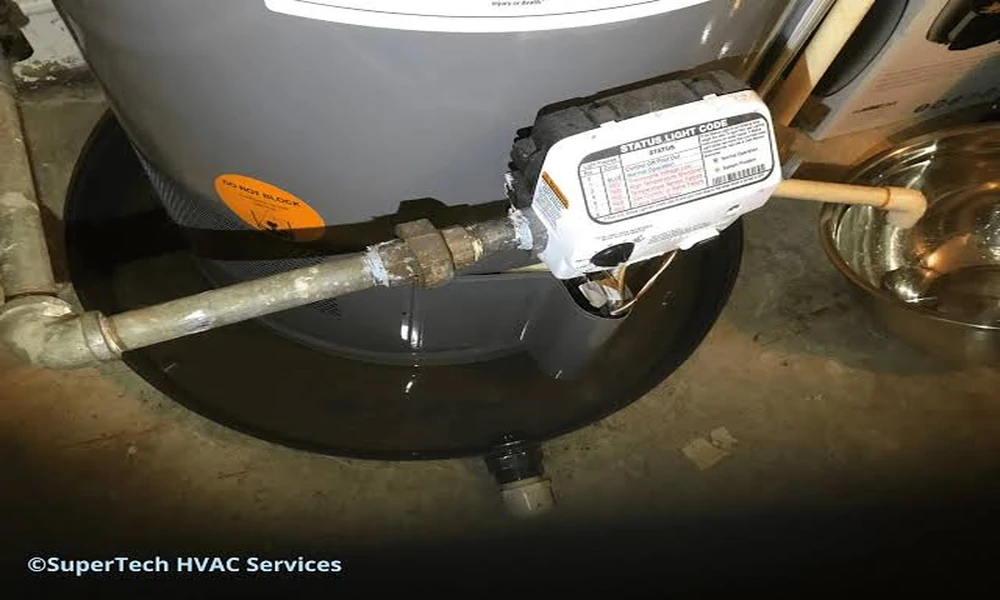

A new water heater should run dry, steady and forgettable for years. When it doesn’t, the tank itself is rarely the culprit. Most early trouble traces back to the system around it: household water pressure, the drain the pan empties into, connections disturbed during the changeout, or a unit that was never matched to how the family actually uses hot water.
South Florida adds its own twists. Many homes keep the heater in a garage or hall closet sitting on a slab, and humid air, mineral heavy water drawn through limestone, and hot garages all shape how equipment behaves. Matching a symptom to its likely cause saves guessing, and it tells you whether you’re facing a five minute adjustment or a problem that can’t wait until morning.
The map below shows symptoms first. Each scenario covers what you’ll notice, what usually sits behind it, and what actually fixes it.
A good installer heads off most of these on day one by testing pressure, running water through the pan drain and checking every joint before leaving. For homeowners booking Water Heater Installation in Anything In Palm Beach County, Leak Pros and More brings a leak detection mindset to the job, so hidden weeps behind the wall and sluggish drain lines get caught before they become stains. Their crews also answer calls around the clock, which matters when a relief valve starts discharging at 2 a.m.
The relief valve drips or its discharge pipe stays wet
What you notice. A slow drip from the pipe running down the side of the tank, often worse after long showers or overnight when nobody is drawing water.
What’s behind it. Thermal expansion. Water swells as it heats, and if the home has a pressure reducing valve, a check valve or a backflow device at the meter, that extra volume has nowhere to go. Pressure climbs until the temperature and pressure relief valve bleeds it off. A new heater exposes the issue because the old valve may have been seized shut for years.
What fixes it. Have static pressure measured at a hose bib. A properly sized expansion tank, precharged to match house pressure, usually ends the dripping. Never cap or plug that line. Under the International Plumbing Code provisions that Florida’s plumbing code builds on, the relief line can’t be reduced in size or fitted with any valve, and it must drain by gravity to a visible termination point.
Water collects in the pan while the tank looks dry
What you notice. A shallow puddle in the drain pan, sometimes within the first week.
What’s behind it. Gas units often sweat during their first cold starts as combustion moisture hits a tank full of cold water; that fades once the water warms. Hybrid heat pump models produce condensate constantly, which is normal. If water sits in the pan for days, the drain line is likely clogged with debris or algae, sloped wrong, or ending somewhere it backs up. A fitting weeping at the top of the tank can also trickle down the jacket and land in the pan.
What fixes it. Treat the pan drain like an AC condensate line: flush it, clear any blockage, and confirm it actually reaches daylight or a floor drain. Here’s a detail many owners never learn: code allows a replacement heater to go in without adding a pan drain where none existed before, which is why some older closets have a pan that drains nowhere. For heat pump units, ENERGY STAR’s installation guidance notes the condensate is clean and can be routed to a nearby drain or a condensate pump, and most standard models need roughly 700 cubic feet of surrounding air, so a cramped closet hurts both drainage and performance.
Damp drywall or baseboard near the closet, pan bone dry
What you notice. A soft spot in the wall, bubbling paint or a musty smell a few weeks after the install.
What’s behind it. A connection disturbed during the swap. Older copper or galvanized stubs flex when a new tank goes in, and torque on a fitting can crack a soldered joint inside the wall where nobody sees it. In slab homes, a hot line under the floor that was already marginal can start leaking once a stronger, hotter unit runs.
What fixes it. Shut every fixture off and watch the leak indicator on your water meter. If it keeps moving, water is escaping somewhere. Acoustic and thermal leak detection can pinpoint the spot without opening walls on a hunch.
Hot water runs out sooner than it did with the old tank
What you notice. The second shower turns lukewarm, even though the new tank holds the same number of gallons.
What’s behind it. Gallons tell only part of the story. The Department of Energy recommends sizing storage heaters by first hour rating, the number of gallons a unit can deliver in an hour starting full, which appears on the yellow EnergyGuide label. Two 50 gallon tanks can differ sharply. Heat pump models running in efficiency mode recover slowly, and a supply and return swapped at the top of the tank will mix cold water into the outlet.
What fixes it. Add up your household’s busiest hour of showers, laundry and dishwashing, then compare it to the label. Switch a hybrid to its hybrid or high demand setting when guests stay over, and confirm the connections and any mixing valve settings.
Popping, rumbling or a sulfur smell within months
What you notice. Crackling sounds while the burner or elements run, or hot water that smells faintly of rotten eggs.
What’s behind it. Scale. Calcium and magnesium drop out of hot water fast, coating the tank floor or electric elements, and steam bubbles pop through that crust. The smell usually comes from bacteria reacting with the anode rod, which is more common in homes running softened water.
What fixes it. Flush the tank periodically, inspect the anode once a year, and ask about an aluminum zinc or powered anode if odor persists. Palm Beach County Water Utilities publishes annual water quality reports at pbcwater.com, which help set a sensible flushing schedule for your neighborhood.
When it stops being a wait and see problem
Water spreading past the pan, a relief valve discharging steadily, scalding temperatures at the tap, or any gas odor all call for shutting off the supply valve above the heater and getting help that night. Everything else on this map can be diagnosed calmly, but none of it should be ignored, because small leaks around a water heater rarely stay small.
Should a Brand New Water Heater Already Be Dripping?
