
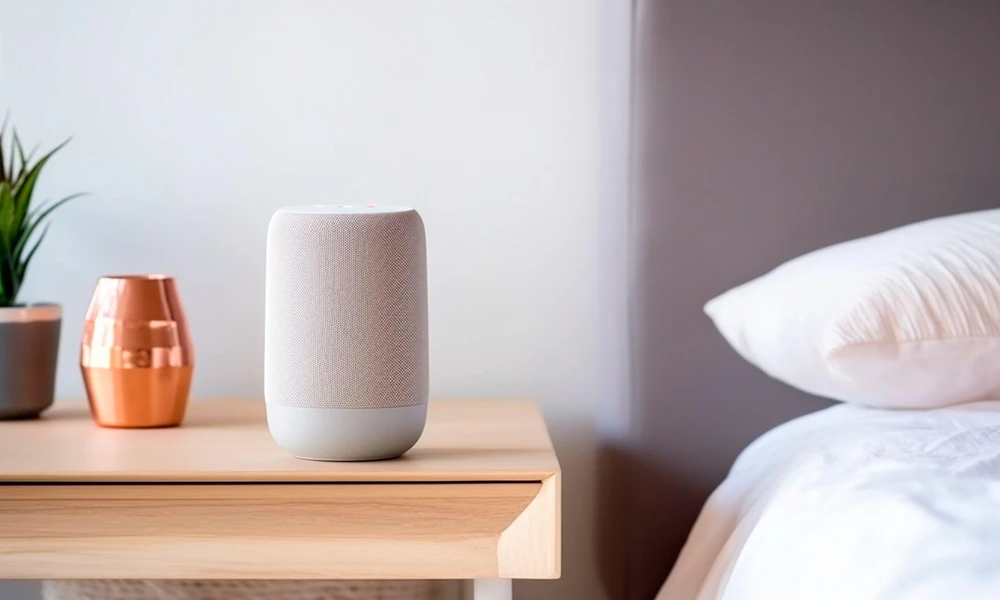

A portable smart speaker combines wireless audio with functions such as voice control, timers, reminders and access to compatible smart home devices. Unlike a speaker designed to remain in one location, a portable model can be moved between different areas of the home, subject to its battery life and wireless connection.
The way a speaker is used can change depending on the room. A smart speaker in Singapore, for example, may be moved between living areas, kitchens, bedrooms, home offices and balconies in compact homes where one device can serve several spaces.
How Can You Use a Portable Smart Speaker in the Living Room?
The living room is commonly used for entertainment and shared activities. A smart speaker can provide music, podcasts, radio and other supported audio without requiring a separate speaker in every part of the room.
Depending on the device and connected services, common uses may include:
- Playing music and other audio through voice commands or a connected device.
- Adjusting playback and volume without handling a phone.
- Setting timers and reminders for household activities.
- Controlling compatible smart lights, televisions, plugs or other connected devices.
- Providing voice access to supported information and services.
Placement can affect both audio performance and voice recognition. Keeping the speaker away from enclosed cabinets and physical obstructions can help its microphones receive commands and allow sound to travel more freely.
Overall, the living room allows the speaker to function as both an audio device and a control point for compatible connected technology.
How Can You Use a Portable Smart Speaker in the Kitchen?
Voice controls can be particularly practical in a kitchen because they allow certain tasks to be completed without touching a device. Users can operate supported functions while preparing food or handling ingredients.
A portable smart speaker may be used to set cooking timers, play audio, create reminders or access supported information through voice commands. Some systems can also manage compatible smart home equipment.
Placement requires additional consideration in a kitchen. Speakers should be kept away from sinks, cooking surfaces, steam and areas where liquids may spill unless the manufacturer specifically states that the device has suitable water resistance.
In summary, kitchen use centres on hands-free functions and audio, while careful placement helps protect the device.
How Can You Use a Portable Smart Speaker in the Bedroom?
In a bedroom, smart speakers can provide audio and support routine functions. Users may listen to music, podcasts or other supported content without installing a permanent audio system.
Other functions can include:
- Setting alarms and timers.
- Creating reminders.
- Controlling compatible lights or other connected devices.
- Adjusting audio using voice commands.
- Playing supported audio as part of morning or evening routines.
Privacy settings are also relevant in personal spaces. Users can review microphone controls, voice history settings and other privacy options provided by the speaker’s platform.
The bedroom therefore shifts the focus from shared entertainment towards personal audio, alarms and routine household controls.
How Can You Use a Portable Smart Speaker in a Home Office?
A home office has different requirements because audio should not interfere with calls, meetings or concentrated work. A speaker can provide background audio at an appropriate volume while also supporting timers and reminders.
Voice-controlled functions may reduce the need to interrupt a task to operate another device. Depending on the system, users may set timers, check supported information, control compatible smart devices or manage audio playback.
Positioning the speaker away from the computer’s microphone may help reduce unwanted audio during online meetings. Muting or lowering the speaker before calls is another straightforward way to prevent interference.
As a result, home-office use generally focuses on simple audio and time-management functions rather than continuous entertainment.
How Can You Use a Portable Smart Speaker in a Balcony or Outdoor Home Area?
A balcony or other outdoor home area introduces conditions that may not exist indoors. That said, before moving a smart speaker outside, users should check its stated water-resistance rating, operating conditions and manufacturer guidance.
Several practical factors should also be considered:
- Wi-Fi coverage may become weaker farther from the router.
- Bluetooth range can be affected by distance and physical barriers.
- Devices without suitable weather resistance should be protected from rain and moisture.
- Direct exposure to excessive heat should be avoided according to manufacturer instructions.
- Volume should be kept at a level that does not unnecessarily disturb neighbouring homes.
Portable models with rechargeable batteries can be moved outside without remaining connected to mains power, although operating time depends on the device and usage.
Outdoor use therefore depends more heavily on connectivity, battery capacity and environmental protection. Checking these factors before moving the speaker helps determine whether a particular area is suitable.
Visit Bose by One Futureworld to make the most of your home audio today.
