
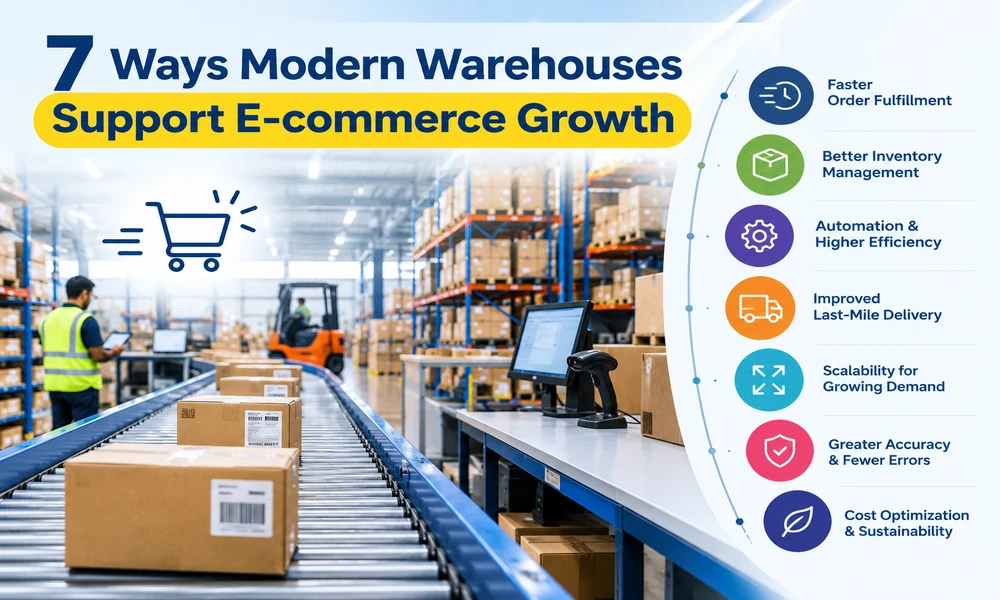

The rapid growth of online shopping has changed how businesses store, manage, and deliver products. Customers now expect faster deliveries, accurate orders, and convenient shopping experiences. To meet these expectations, businesses are increasingly investing in urban warehousing solutions that bring inventory closer to customers and improve distribution efficiency. Modern warehouses are no longer just storage spaces; they play an important role in managing inventory, streamlining operations, and supporting the overall growth of e-commerce businesses.
1. Faster Order Fulfilment and Delivery
Speed matters in e-commerce. Customers often prefer platforms that offer same-day or next-day delivery, making warehouse location an important part of the delivery process. Modern warehouses situated near major residential and commercial areas help businesses reduce the distance between inventory and customers.
With strategically located facilities, businesses can process orders quickly and dispatch products without unnecessary transportation delays. This also helps improve customer satisfaction and creates a smoother shopping experience.
2. Better Inventory Management
Managing thousands of products across different categories can become challenging, especially for growing e-commerce businesses. Modern warehouses use digital tools and organised storage systems to maintain accurate inventory records and reduce stock-related issues.
Warehouse Management Systems (WMS) help businesses track product movement, monitor stock availability, and manage incoming and outgoing shipments. These systems also make it easier to identify fast-moving products and plan inventory replenishment.
Some key inventory management benefits include:
- Real-time stock tracking and visibility
- Reduced chances of overstocking and stockouts
- Better organisation of products
- Improved order picking and packing accuracy
- Easier inventory forecasting and planning
3. Improved Last-Mile Delivery Efficiency
Last-mile delivery is one of the most important stages of e-commerce logistics. It involves transporting products from a distribution facility to the customer’s doorstep. Delays during this stage can affect customer satisfaction and increase delivery expenses.
Modern warehouses located closer to consumption centres help businesses improve last-mile delivery efficiency. They reduce travel distances, support quicker dispatch, and make it easier to manage multiple delivery locations.
For businesses operating in densely populated markets such as Mumbai, strategically positioned urban facilities can be particularly useful. They help logistics teams serve different neighbourhoods while managing delivery schedules more effectively.
4. Support for Growing Business and Order Volumes
As an e-commerce business expands, its storage and distribution requirements also increase. Seasonal sales, festive offers, promotional campaigns, and new product launches can create sudden spikes in order volumes.
Modern facilities offer better space utilisation and operational flexibility, helping businesses manage these changing requirements. Scalable warehousing solutions allow companies to adjust storage capacity and handling operations as their business grows.
Businesses should consider warehouses that offer:
- Sufficient storage capacity for growing inventory
- Flexible space utilisation
- Efficient loading and unloading facilities
- Room for additional handling operations
- Infrastructure that supports future expansion
Having access to suitable warehouse space makes it easier to manage business growth without disrupting daily operations.
5. Better Order Accuracy and Customer Experience
Receiving the wrong product or an incomplete order can negatively affect the customer experience. Modern warehouses use organised picking, sorting, scanning, and packaging processes to minimise such errors.
Barcode scanning, RFID technology, and automated sorting systems help warehouse teams identify products accurately before dispatch. These processes improve order accuracy and reduce returns caused by incorrect shipments.
Efficient e-commerce logistics management also helps businesses maintain better communication between inventory teams, warehouse operators, and delivery partners. As a result, customers benefit from more reliable order processing and timely deliveries.
6. Cost Optimisation Across Logistics Operations
Warehouse operations involve several expenses, including rent, labour, transportation, utilities, and inventory handling. Poorly planned storage and distribution networks can increase these costs and affect business profitability.
Modern warehouses help businesses optimise expenses through better layouts, organised storage, efficient material handling, and strategic locations. Choosing facilities near major transport routes and consumption centres can also reduce unnecessary transportation costs.
Businesses can improve cost efficiency by focusing on:
- Selecting warehouses near key customer markets
- Optimising storage layouts and inventory movement
- Reducing unnecessary product handling
- Improving workforce and equipment utilisation
- Planning transportation routes more effectively
The goal is not simply to reduce warehouse rent but to improve the overall efficiency of the supply chain.
7. Stronger Supply Chain Connectivity
E-commerce businesses often depend on multiple suppliers, distributors, fulfilment centres, and delivery partners. Coordinating these activities requires reliable infrastructure and smooth connectivity between different locations.
Modern logistics facilities support better coordination by connecting storage, transportation, and distribution activities. Multimodal logistics infrastructure can further improve cargo movement by integrating road, rail, and other transportation networks.
For instance, logistics developments such as Fourmativ‘s FOURUN in Mumbai highlight the growing role of strategically positioned warehousing facilities in supporting regional distribution and urban supply chains. Such infrastructure is increasingly relevant as businesses look for efficient ways to serve customers across expanding markets.
What Should Businesses Look for in a Modern Warehouse?
Before selecting a warehouse, e-commerce businesses should evaluate whether the facility can support their operational and distribution requirements. The right location and infrastructure can make a significant difference in long-term efficiency.
Some important considerations include:
- Location: Proximity to customers, suppliers, and major transport routes.
- Infrastructure: Quality construction, sufficient storage height, and loading facilities.
- Technology: Availability of digital inventory and warehouse management systems.
- Accessibility: Easy connectivity for goods vehicles and delivery operations.
- Flexibility: Ability to accommodate changing inventory and business requirements.
Conclusion
Modern warehouses have become an essential part of the e-commerce ecosystem. From faster order fulfilment and better inventory management to improved last-mile delivery and cost optimisation, they support several aspects of business growth. As online shopping continues to expand, businesses need to focus on strategically located facilities, efficient infrastructure, and reliable logistics networks. Investing in the right urban warehousing solutions can help e-commerce companies improve operational efficiency, meet customer expectations, and build a more responsive supply chain.
7 Ways Modern Warehouses Support E-commerce Growth
